
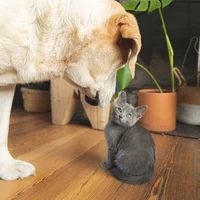
They’ll Fight Like Cats and Dogs! Or will they?
“They’ll fight like cats and dogs” is one of the most repeated sayings around—but it isn’t always true. With the right breed and a patient introduction, a dog and a cat can become genuine companions.
If you already have a cat (or plan to add one) and you’re shopping for a puppy, a little planning goes a long way. Here’s how to choose a dog that’s more likely to accept a feline housemate, plus the steps that help two very different animals learn to trust each other.
Why Breed Group Matters
A dog’s original purpose shapes its instincts, and those instincts influence how it reacts to a cat. Understanding the general tendencies of each group helps you set realistic expectations.
- Terrier Group: Bred to hunt small game—which can unfortunately include a darting cat.
- Hound Group: Built to chase and follow scent or sight, so a fleeing cat may trigger the chase.
- Herding Group: Designed to move and direct other animals; independent cats rarely appreciate being herded.
Dogs in these groups can live happily with cats, but many will need extra training and supervision to get there. You can read more about how the American Kennel Club organizes dog breed groups to better understand a puppy’s natural drives.
The Calmer, Cat-Friendly Personalities
Breeds known for a laid-back, lower-energy temperament tend to do best with cats. Smaller lapdog types are often close to a cat’s own size, which feels less threatening, and they typically spend more energy cuddling than chasing. Dogs that don’t over-bark are also less likely to startle a sensitive feline.
Puppies That Often Do Well With Cats
Every dog is an individual, but these breeds we carry are known for the gentle, sociable temperaments that pair nicely with cats.
Bichon Frises
Warm, gentle, and rarely aggressive, the Bichon loves to curl up beside any furry friend. Their small size also helps a cat feel less threatened.
Cavapoos
Blending the affectionate Cavalier temperament with the smart, adaptable Poodle, Cavapoos are calm, loving, and quick to warm up to other pets in the home.
Malteses
These tiny, sweet-natured companions are content to relax close to the family, making them a comfortable fit for a household cat.
Cocker Spaniels
Friendly and eager to please, Cocker Spaniels are known for a gentle disposition that helps them coexist peacefully with other animals.
Labrador Retrievers
The ever-popular Lab is social without being anxious—patient, warm, and famously good-natured. This breed has ranked among America’s favorites for years and tends to share space well with cats.
How to Introduce a Dog and a Cat
In an ideal world, both pets meet while young so they can grow up bonded and without territorial conflict. If you’re adding a cat to a home that already has a dog (or vice versa), take it slow and in stages.
- Keep them separated at first. Let each animal get used to the other’s scent and sounds from different rooms.
- Progress to a barrier. Allow visual introductions on opposite sides of a sturdy pet gate to prevent scratching or biting.
- Supervise every early interaction. Reward calm behavior and never force contact.
For a detailed, vet-backed routine, the ASPCA’s general dog care guidance is a helpful resource as you plan those first meetings.
Patience Is the Real Secret
No matter which breed you choose, the key ingredient is patience. Not all animals get along by nature, but with time, care, and a gradual, step-by-step introduction, your new puppy’s best friend just might turn out to be the family cat.
Ready to find a gentle, cat-friendly companion? Browse our available puppies at Petland Pensacola, explore all the dog breeds we carry, and ask our team about flexible financing and payment options when you visit.