
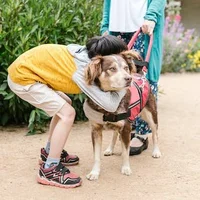
What Are Service Dogs?
Service dogs are highly trained working animals that support people living with disabilities or medical conditions. Each dog masters a specific set of skills through extensive training and testing, from guiding people who are blind to helping with everyday tasks and offering steady companionship.
In the United States, genuine service dogs are recognized and protected under the Americans with Disabilities Act, which grants them access to public spaces alongside their handlers.
Types of Service Dogs and Their Jobs
Service dogs are trained for very different roles depending on the needs of the person they assist. Some of the most common types include:
- Guide dogs for people who are blind or have low vision
- Autism service dogs
- PTSD service dogs
- Hearing dogs
- Medical alert dogs
- Diabetic alert dogs
- Seizure response dogs
- Allergy detection dogs
- Mobility assistance dogs
This list isn't exhaustive. If you have a condition that isn't shown above, you may still qualify to apply for a service dog suited to your situation. You can review the fundamentals of task training in the American Kennel Club's service dog training guide.
Breeds That Excel as Service Dogs
Service dogs come in many shapes, sizes, and breeds, but a few consistently stand out. The best candidates tend to be intelligent, eager to please, warm, and approachable, with little to no aggression. Several of the breeds we carry at Petland Pensacola fit that profile well.
Labrador Retriever
A smart, personable breed with a loving, outgoing personality, the Labrador Retriever is one of the most popular service dogs in the world. Labs train readily and thrive on partnership with their handler.
Bernese Mountain Dog
Alert, active, and quick to bond, the Bernese Mountain Dog is eager to please and learns with ease. Its calm devotion makes it a dependable working companion.
Pomeranian
Small and lovable, the Pomeranian does well in smaller homes and is patient, caring, and deeply loyal. Despite its size, it can be trained for a range of service tasks such as medical alerts.
Temperament and trainability matter more than any single breed, so doing your research helps you find the right match for your specific needs. You can compare temperaments across the dog breeds we carry before deciding.
Do You Have to Register a Service Dog?
No. Registration is not required under U.S. law, but many handlers choose to do it anyway. Having documentation can reduce confusion and help you avoid access issues, especially as fake service dogs have become more common. Many private businesses restrict non-service animals, so clear paperwork can make outings smoother.
Where Registration Is Offered
A handful of organizations offer voluntary service dog registration. These groups typically ask you to describe your disability or need, the tasks your dog performs, and the training your dog has completed. Because rules and access rights are governed by the ADA, it's worth confirming current guidance with your veterinarian and reviewing the AVMA's overview of service and support animals.
Finding the Right Companion
Through proper training and care, service dogs continue to prove the saying that dogs are truly our best friends. Choosing a breed with the right temperament is the first step toward a successful partnership.
If you're ready to meet a smart, affectionate companion, stop by to see our available puppies at Petland Pensacola, and ask our team about financing and payment options that fit your budget.